
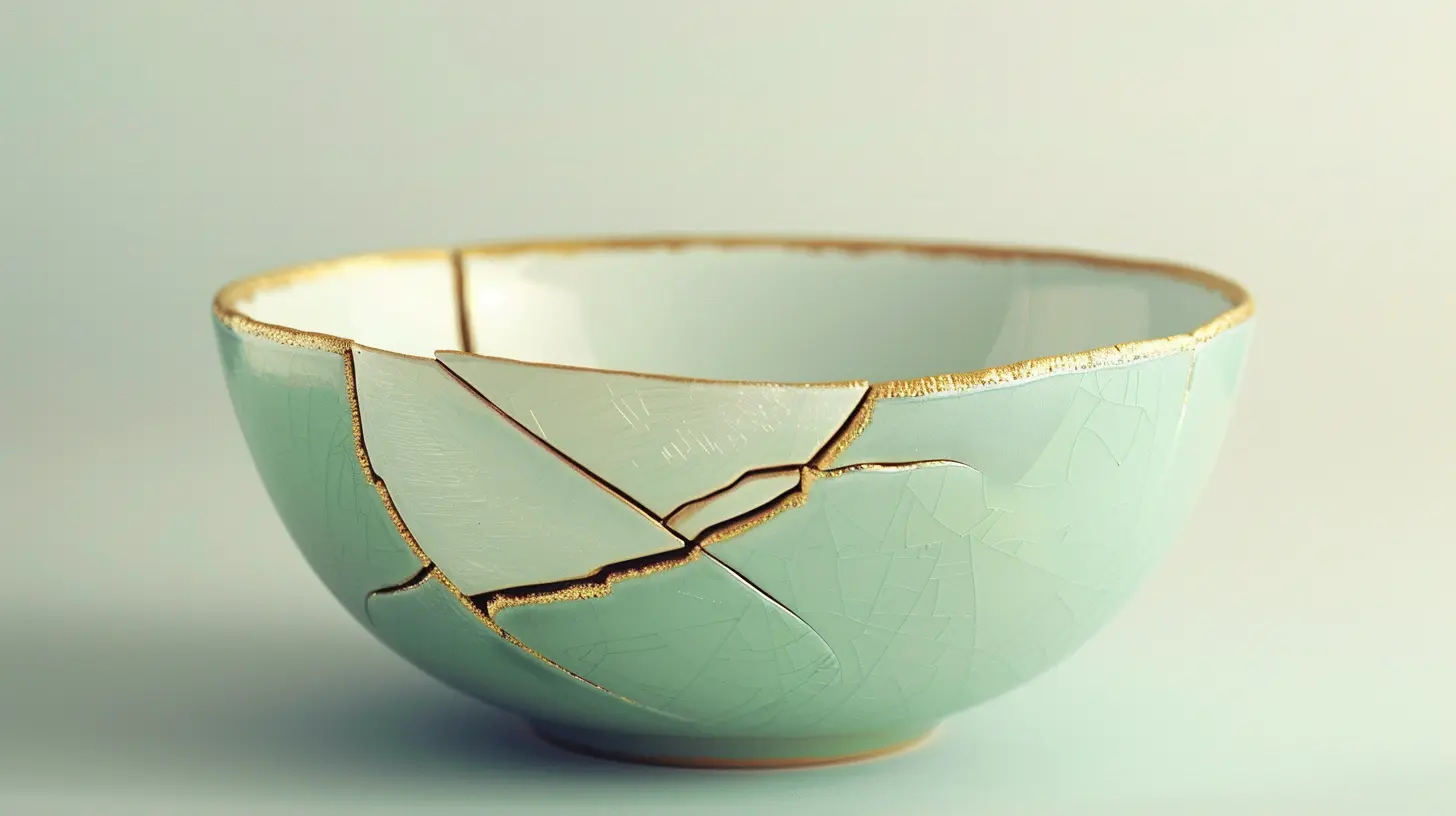
There are moments that tear cracks into a life: an illness, a job loss, a rupture in the family. We fall, pick ourselves up, and hope to return to who we were before. That is called resilience. But what if "like before" is not enough? What if fractures leave behind more than scars, and are instead the beginning of something stronger? Welcome to the world of antifragility.
Resistance, Resilience, Antifragility: Three Levels of Strength
The terms sound similar, but they are fundamentally different:
- Resistance is defence. Holding firm until it is no longer possible. Like a concrete pillar that eventually breaks.
- Resilience is adaptation. Springing back to the old equilibrium after something has gone wrong. A rubber band that returns to its shape after being stretched.
- Antifragility goes further: it needs the chaos. It thrives on disruption. Like muscles that grow stronger precisely because they tear during training.
The real meaning: antifragility converts crises into fuel. It does not just restore us, it makes us better.
Why This Matters
Resilience, in a world full of uncertainty, only gets us so far. It brings us back to zero. Antifragility, by contrast, opens an upward spiral. It turns fractures into turning points, setbacks into resources.
This is not theory from a textbook. Nassim Nicholas Taleb, who coined the term, puts it this way: "The resilient resists. The antifragile gets better."
Antifragility in Everyday Life
Antifragility is not a luxury reserved for philosophers. It is a practical attitude, built through small exercises:
- Voluntary stress: Seek out friction deliberately. Cold, exertion, discomfort. A hard workout, a plunge into cold water, a short fast. Small shocks are mini training camps.
- Allowing disorder: Stop trying to eliminate every risk. When something goes wrong, a client cancels, plans fall apart, do not ask "Why me?" Ask "What can I make of this?"
- Letting go: Clinging to status, routines, or control makes us brittle. Letting go keeps us mobile.
- Resilience is the floor. Antifragility is the staircase upward.
- Chaos is not an opponent, but a training partner. Those who wrestle with it come out of the round stronger.
- Set yourself deliberate obstacles. Cold, exertion, discomfort. Small fractures in daily life prepare you for the larger fractures in life.
A New Way of Looking at Strength
Fractures are not a flaw. They are the beginning of something new. In Japan, the art of kintsugi holds that broken ceramics repaired with gold are more valuable than they were before.
Antifragility is kintsugi for life. Every fracture can make you stronger, as long as you do not deny it, but accept it.
Or, as Muhammad Ali put it:
"Don't count the days. Make the days count."